9.8.14

The West on the wrong path


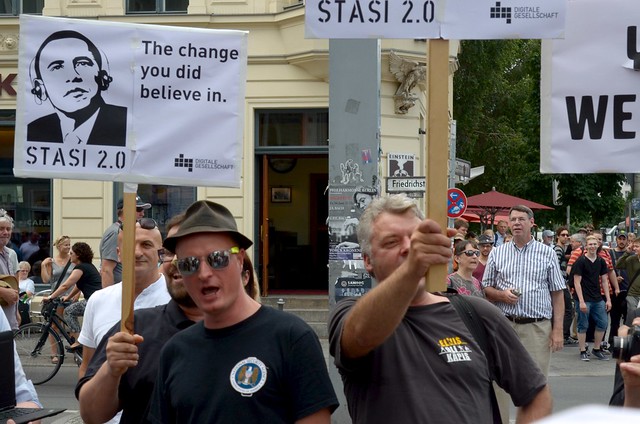
In view of the events in Ukraine, the government and many media have switched from level-headed to agitated. The spectrum of opinions has been narrowed to the width of a sniper scope. The politics of escalation does not have a realistic goal – and harms German interests.

Düsseldorf.  Every war is accompanied by a kind of mental mobilization: war fever. Even smart people are not immune to controlled bouts of this fever. “This war in all its atrociousness is still a great and wonderful thing. It is an experience worth having“ rejoiced Max Weber in 1914 when the lights went out in Europe. Thomas Mann felt a “cleansing, liberation, and a tremendous amount of hope“.

Even when thousands already lay dead on the Belgian battle fields, the war fever did not subside. Exactly 100 years ago, 93 painters, writers, and scientists composed the “Call to the world of culture.“ Max Liebermann, Gerhart Hauptmann, Max Planck, Wilhelm Röntgen, and others encouraged their countrymen to engage in cruelty towards their neighbor: “Without German militarism, German culture would have been swept from the face of the earth a long time ago. The German armed forces and the German people are one. This awareness makes 70 million Germans brothers without prejudice to education, status, or party.“

We interrupt our own train of thought: “History is not repeating itself!” But can we be so sure about that these days? In view of the war events in the Crimean and eastern Ukraine, the heads of states and governments of the West suddenly have no more questions and all the answers. The US Congress is openly discussing arming Ukraine. The former security advisor Zbigniew Brzezinski recommends arming the citizens there for house-to-house and street combat. The German Chancellor, as it is her habit, is much less clear but no less ominous: “We are ready to take severe measures.“

German journalism has switched from level-headed to agitated in a matter of weeks. The spectrum of opinions has been narrowed to the field of vision of a sniper scope.

Newspapers we thought to be all about thoughts and ideas now march in lock-step with politicians in their calls for sanctions against Russia's President Putin. Even the headlines betray an aggressive tension as is usually characteristic of hooligans when they 'support' their respective teams.

The Tagesspiegel: “Enough talk!“ The FAZ: “Show strength“. The Süddeutsche Zeitung: “Now or never.“ The Spiegel calls for an “End to cowardice“: “Putin's web of lies, propaganda, and deception has been exposed. The wreckage of MH 17 is also the result of a crashed diplomacy.“

Western politics and German media agree.

Every reflexive string of accusations results in the same outcome: in no time allegations and counter-allegations become so entangled that the facts become almost completely obscured.
Who deceived who first?

Did it all start with the Russian invasion of the Crimean or did the West first promote the destabilization of the Ukraine? Does Russia want to expand into the West or NATO into the East? Or did maybe two world-powers meet at the same door in the middle of the night, driven by very similar intentions towards a defenseless third that now pays for the resulting quagmire with the first phases of a civil war?

If at this point you are still waiting for an answer as to whose fault it is, you might as well just stop reading. You will not miss anything. We are not trying to unearth this hidden truth. We don't know how it started. We don't know how it will end. And we are sitting right here, in the middle of it. At least Peter Sloterdijk has a few words of consolation for us: “To live in the world means to live in uncertainty.“

Our purpose is to wipe off some of the foam that has formed on the debating mouths, to steal words from the mouths of both the rabble-rousers and the roused, and put new words there instead. One word that has become disused of late is this: realism.

The politics of escalation show that Europe sorely misses a realistic goal. It's a different thing in the US. Threats and posturing are simply part of the election preparations. When Hillary Clinton compares Putin with Hitler, she does so only to appeal to the Republican vote, i.e. people who do not own a passport. For many of them, Hitler is the only foreigner they know, which is why Adolf Putin is a very welcome fictitious campaign effigy. In this respect, Clinton and Obama have a realistic goal: to appeal to the people, to win elections, to win another Democratic presidency.

Angela Merkel can hardly claim these mitigating circumstances for herself. Geography forces every German Chancellor to be a bit more serious. As neighbors of Russia, as part of the European community bound in destiny, as recipient of energy and supplier of this and that, we Germans have a clearly more vital interest in stability and communication. We cannot afford to look at Russia through the eyes of the American Tea Party.

Every mistake starts with a mistake in thinking. And we are making this mistake if we believe that only the other party profits from our economic relationship and thus will suffer when this relationship stops. If economic ties were maintained for mutual profit, then severing them will lead to mutual loss. Punishment and self-punishment are the same thing in this case.

Even the idea that economic pressure and political isolation would bring Russia to its knees was not really thought all the way through. Even if we could succeed: what good would Russia be on its knees? How can you want to live together in the European house with a humiliated people whose elected leadership is treated like a pariah and whose citizens you might have to support in the coming winter.

Of course, the current situation requires a strong stance, but more than anything a strong stance against ourselves. Germans have neither wanted nor caused these realities, but they are now our realities. Just consider what Willy Brandt had to listen to when his fate as mayor of Berlin placed him in the shadow of the wall. What sanctions and punishments were suggested to him. But he decided to forgo this festival of outrage. He never turned the screw of retribution.

When he was awarded the Noble Prize for Peace he shed light on what went on around him in the hectic days when the wall was built: “There is still another aspect – that of impotence disguised by verbalism: taking a stand on legal positions which cannot become a reality and planning counter-measures for contingencies that always differ from the one at hand. At critical times we were left to our own devices; the verbalists had nothing to offer.“

The verbalists are back and their headquarters are in Washington D.C. But nobody is forcing us to kowtow to their orders. Following this lead – even if calculatingly and somewhat reluctantly as in the case of Merkel – does not protect the German people, but may well endanger it. This fact remains a fact even if it was not the American but the Russians who were responsible for the original damage in the Crimean and in eastern Ukraine.

Willy Brandt decided clearly differently than Merkel in the present, and that in a clearly more intense situation. As he recalls, he had awoken on the morning of August 13, 1961 “wide awake and at the same time numb“. He had stopped over in Hanover on a trip when he received reports from Berlin about work being done on the large wall separating the city. It was a Sunday morning and the humiliation could hardly be greater for a sitting mayor.

The Soviets had presented him with a fait accompli. The Americans had not informed him even though they had probably received some information from Moscow. Brandt remembers that an “impotent rage“ had risen in him. But what did he do? He reined in his feelings of impotence and displayed his great talent as reality-based politician which would garner him a stint as Chancellor and finally also the Nobel Prize for Peace.

With the advice from Egon Bahr, he accepted the new situation, knowing that no amount of outrage from the rest of the world would bring this wall down again for a while. He even ordered the West-Berlin police to use batons and water cannons against demonstrators at the wall in order not to slip from the catastrophe of division into the much greater catastrophe of war. He strove for the paradox which Bahr put as follows later: “We acknowledged the Status Quo in order to change it.“

And they managed to accomplish this change. Brandt and Bahr made the specific interests of the West Berlin population for who they were now responsible (from June 1962 onwards this also included this author) into the measure of their politics.

In Bonn they negotiated the Berlin subvention, an eight-percent tax-free subvention on payroll and income tax. In the vernacular it was called the “fear premium“. They also negotiated a travel permit treaty with East Berlin which made the wall permeable again two years after it was put up. Between Christmas 1963 and New Year’s 1964, 700 000 inhabitants of Berlin visited their relatives in the east of the city. Every tear of joy turned into a vote for Brandt a short while later.

The voters realized that here was someone who wanted to affect the way they lived every day, not just generate a headline for the next morning. In an almost completely hopeless situation, this SPD man fought for western values – in this case the values of freedom of movement – without bullhorns, without sanctions, without the threat of violence. The elite in Washington started hearing words that had never been heard in politics before: Compassion. Change through rapprochement. Dialog. Reconciliation of interests. And this in the middle of the Cold War, when the world powers were supposed to attack each other with venom, when the script contained only threats and protestations; set ultimatums, enforce sea blockades, conduct representative wars, this is how the Cold War was supposed to be run.

A German foreign policy striving for reconciliation – in the beginning only the foreign policy of Berlin – not only appeared courageous but also very strange.

The Americans – Kennedy, Johnson, then Nixon – followed the German; it kicked off a process which is unparalleled in the history of enemy nations. Finally, there was a meeting in Helsinki in order to set down the rules. The Soviet Union was guaranteed “non-interference into their internal affairs“ which filled party boss Leonid Brezhnev with satisfaction and made Franz Josef Strauß's blood boil. In return, the Moscow Communist Party leadership had to guarantee the West (and thus their own civil societies) “respect of human rights and fundamental freedoms, including that of thought, conscience, religion or belief“.

In this way “non-interference“ was bought through “involvement“. Communism had received an eternal guarantee for its territory, but within its borders universal human rights suddenly began to brew. Joachim Gauck remembers: “The word that allowed my generation to go on was Helsinki.“

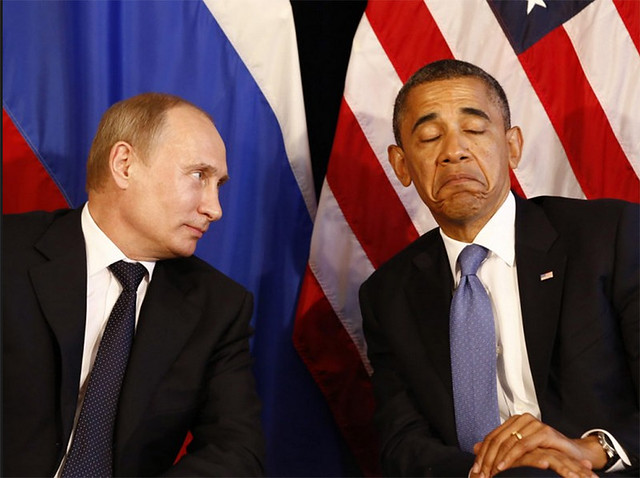
It is not too late for the duo Merkel/Steinmeier to use the concepts and ideas of this time. It does not make sense to just follow the strategically idea-less Obama. Everyone can see how he and Putin are driving like in a dream directly towards a sign which reads: Dead End.

“The test for politics is not how something starts but how it ends“, so Henry Kissinger, also a Peace Nobel Prize winner. After the occupation of the Crimean by Russia he stated: we should want reconciliation, not dominance. Demonizing Putin is not a policy. It is an alibi for the lack thereof. He advises condensing conflicts, i.e. to make them smaller, shrink them, and then distill them into a solution.

At the moment (and for a long time before that) America is doing the opposite. All conflicts are escalated. The attack of a terror group named Al Qaida is turned into a global campaign against Islam. Iraq is bombed using dubious justifications. Then the US Air Force flies on to Afghanistan and Pakistan. The relationship to the Islamic world can safely be considered damaged.

If the West had judged the then US government which marched into Iraq without a resolution by the UN and without proof of the existence of “WMDs“ by the same standards as today Putin, then George W. Bush would have immediately been banned from entering the EU. The foreign investments of Warren Buffett should have been frozen, the export of vehicles of the brands GM, Ford, and Chrysler banned.

The American tendency to verbal and then also military escalation, the isolation, demonization, and attacking of enemies has not proven effective. The last successful major military action the US conducted was the Normandy landing. Everything else – Korea, Vietnam, Iraq, and Afghanistan – was a clear failure. Moving NATO units towards the Polish border and thinking about arming Ukraine is a continuation of a lack of diplomacy by the military means.

This policy of running your head against the wall – and doing so exactly where the wall is the thickest – just gives you a head ache and not much else. And this considering that the wall has a huge door in the relationship of Europe to Russia. And the key to this door is labeled “reconciliation of interests“.

The first step is what Brandt called “compassion“, i.e. the ability to see the world through the eyes of the others. We should stop accusing the 143 million Russian that they look at the world differently than John McCain.
What is needed is help in modernizing the country, no sanctions which will further decrease the dearth of wealth and damage the bond of relationships. Economic relationships are also relationships. International cooperation is akin to tenderness between nations because everyone feels better afterwards.

It is well-known that Russia is an energy super-power and at the same time a developing industrial nation. The policy of reconciliation and mutual interests should attack here. Development aid in return for territorial guarantees; Foreign Minister Frank-Walter Steinmeier even had the right words to describe this: modernization partnership. He just has to dust it off and use it as an aspirational word. Russia should be integrated, not isolated. Small steps in that direction are better than the great nonsense of exclusionary politics.

Brandt and Bahr have never reached for the tool of economic sanctions. They knew why: there are no recorded cases in which countries under sanctions apologized for their behavior and were obedient ever after. On the contrary: collective movements start in support of the sanctioned, as is the case today in Russia. The country was hardly ever more unified behind their president than now. This could almost lead you to think that the rabble-rousers of the West are on the payroll of the Russian secret service.

One more comment about the tone of the debate. The annexation of the Crimean was in violation of international law. The support of separatists in eastern Ukraine also does not mesh with our ideas of the state sovereignty. The boundaries of states are inviolable.

But every act requires context. And the German context is that we are a society on probation which may not act as if violations of international law started with the events in the Crimean.

Germany has waged war against its eastern neighbor twice in the past 100 years. The German soul, which we generally claim to be on the romantic side, showed its cruel side.

Of course, we who came later can continue to proclaim our outrage against the ruthless Putin and appeal to international law against him, but the way things are this outrage should come with a slight blush of embarrassment. Or to use the words of Willy Brandt: “Claims to absolutes threaten man.“

In the end, even the men who had succumbed to war fever in 1914 had to realize this. After the end of the war, the penitent issued a second call, this time to understanding between nations: “The civilized world became a war camp and battle field. It is time that a great tide of love replaces the devastating wave of hatred.“

We should try to avoid the detour via the battle fields in the 21st century. History does not have to repeat itself. Maybe we can find a shortcut.

Gabor Steingart, publisher of Germany’s leading financial newspaper Handelsblatt.


2.2.14

"The greatest fear I have regarding the disclosures is nothing will change"


 Snowden-Interview: Transcript


Mr Snowden did you sleep well the last couple of nights because I was reading that you asked for a kind of police protection. Are there any threats? 
There are significant threats but I sleep very well. There was an article that came out in an online outlet called Buzz Feed where they interviewed officials from the Pentagon, from the National Security Agency and they gave them anonymity to be able to say what they want and what they told the reporter was that they wanted to murder me. These individuals - and these are acting government officials. They said they would be happy, they would love to put a bullet in my head, to poison me as I was returning from the grocery store and have me die in the shower

But fortunately you are still alive with us.
Right but I'm still alive and I don't lose sleep because I’ve done what I feel I needed to do. It was the right thing to do and I’m not going to be afraid.

"The greatest fear I have", and I quote you, "regarding the disclosures is nothing will change." That was one of your greatest concerns at the time but in the meantime there is a vivid discussion about the situation with the NSA; not only in America but also in Germany and in Brazil and President Obama was forced to go public and to justify what the NSA was doing on legal grounds.
What we saw initially in response to the revelations was sort of a circling of the wagons of government around the National Security Agency. Instead of circling around the public and protecting their rights the political class circled around the security state and protected their rights. What’s interesting is though that was the initially response, since then we’ve seen a softening. We’ve seen the President acknowledge that when he first said "we’ve drawn the right balance, there are no abuses", we’ve seen him and his officials admit that there have been abuses. There have been thousands of violations of the National Security Agency and other agencies and authorities every single year.

Is the speech of Obama the beginning of a serious regulation?
It was clear from the President’s speech that he wanted to make minor changes to preserve authorities that we don’t need. The President created a review board from officials that were personal friends, from national security insiders, former Deputy of the CIA, people who had every incentive to be soft on these programs and to see them in the best possible light. But what they found was that these programs have no value, they’ve never stopped a terrorist attack in the United States and they have marginal utility at best for other things. The only thing that the Section 215 phone metadata program, actually it’s a broader metadata programme of bulk collection – bulk collection means mass surveillance – program was in stopping or detecting $ 8.500 wire transfer from a cab driver in California and it’s this kind of review where insiders go we don’t need these programs, these programs don’t make us safe. They take a tremendous amount of resources to run and they offer us no value. They go "we can modify these". The National Security agency operates under the President’s executive authority alone. He can end of modify or direct a change of their policies at any time.

For the first time President Obama did concede that the NSA collects and stores trillions of data.
Every time you pick up the phone, dial a number, write an email, make a purchase, travel on the bus carrying a cell phone, swipe a card somewhere, you leave a trace and the government has decided that it’s a good idea to collect it all, everything, even if you’ve never been suspected of any crime. Traditionally the government would identify a suspect, they would go to a judge, they would say we suspect he’s committed this crime, they would get a warrant and then they would be able to use the totality of their powers in pursuit of the investigation. Nowadays what we see is they want to apply the totality of their powers in advance - prior to an investigation.

You started this debate, Edward Snowden is in the meantime a household name for the whistleblower in the age of the internet. You were working until last summer for the NSA and during this time you secretly collected thousands of confidential documents. What was the decisive moment or was there a long period of time or something happening, why did you do this?
I would say sort of the breaking point is seeing the Director of National Intelligence, James Clapper, directly lie under oath to Congress. There’s no saving an intelligence community that believes it can lie to the public and the legislators who need to be able to trust it and regulate its actions. Seeing that really meant for me there was no going back. Beyond that, it was the creeping realisation that no one else was going to do this. The public had a right to know about these programs. The public had a right to know that which the government is doing in its name, and that which the government is doing against the public, but neither of these things we were allowed to discuss, we were allowed no, even the wider body of our elected representatives were prohibited from knowing or discussing these programmes and that’s a dangerous thing. The only review we had was from a secret court, the FISA Court, which is a sort of rubber stamp authority
When you are on the inside and you go into work everyday and you sit down at the desk and you realise the power you have  - you can wire tap the President of the United States, you can wire tap a Federal Judge and if you do it carefully no one will ever know because the only way the NSA discovers abuses are from self reporting.

We’re not talking only of the NSA as far as this is concerned, there is a multilateral agreement for co-operation among the services and this alliance of intelligence operations is known as the Five Eyes. What agencies and countries belong to this alliance and what is its purpose?
The Five Eyes alliance is sort of an artifact of the post World War II era where the Anglophone countries are the major powers banded together to sort of co-operate and share the costs of intelligence gathering infrastructure.

So we have the UK’s GCHQ, we have the US NSA, we have Canada’s C-Sec, we have the Australian Signals Intelligence Directorate and we have New Zealand’s DSD. What the result of this was over decades and decades what sort of a supra-national intelligence organisation that doesn’t answer to the laws of its own countries.

In many countries, as in America too the agencies like the NSA are not allowed to spy within their own borders on their own people. So the Brits for example they can spy on everybody but the Brits but the NSA can conduct surveillance in England so in the very end they could exchange their data and they would be strictly following the law.
If you ask the governments about this directly they would deny it and point to policy agreements between the members of the Five Eyes saying that they won’t spy on each other’s citizens but there are a couple of key points there. One is that the way they define spying is not the collection of data. The GCHQ is collecting an incredible amount of data on British Citizens just as the National Security Agency is gathering enormous amounts of data on US citizens. What they are saying is that they will not then target people within that data. They won’t look for UK citizens or British citizens. In addition the policy agreements between them that say British won’t target US citizens, US won’t target British citizens are not legally binding. The actual memorandums of agreement state specifically on that that they are not intended to put legal restriction on any government. They are policy agreements that can be deviated from or broken at any time. So if they want to on a British citizen they can spy on a British citizen and then they can even share that data with the British government that is itself forbidden from spying on UK citizens. So there is a sort of a trading dynamic there but it’s not, it’s not open, it’s more of a nudge and wink and beyond that the key is to remember the surveillance and the abuse doesn’t occur when people look at the data it occurs when people gather the data in the first place.

How narrow is the co-operation of the German Secret Service BND with the NSA and with the Five Eyes?
I would describe it as intimate. As a matter of fact the first way I described it in our written interview was that the German Services and the US Services are in bed together. They not only share information, the reporting of results from intelligence, but they actually share the tools and the infrastructure they work together against joint targets in services and there’s a lot of danger in this. One of the major programmes that faces abuse in the National Security Agency is what’s called "XKeyscore". It’s a front end search engine that allows them to look through all of the records they collect worldwide every day.

What could you do if you would sit so to speak in their place with this kind of instrument?
You could read anyone’s email in the world. Anybody you’ve got email address for, any website you can watch traffic to and from it, any computer that an individual sits at you can watch it, any laptop that you’re tracking you can follow it as it moves from place to place throughout the world. It’s a one stop shop for access to the NSA’s information. And what’s more you can tag individuals using "XKeyscore". Let’s say I saw you once and I thought what you were doing was interesting or you just have access that’s interesting to me, let’s say you work at a major German corporation and I want access to that network, I can track your username on a website on a form somewhere, I can track your real name, I can track associations with your friends and I can build what’s called a fingerprint which is network activity unique to you which means anywhere you go in the world anywhere you try to sort of hide your online presence hide your identity, the NSA can find you and anyone who’s allowed to use this or who the NSA shares their software with can do the same thing. Germany is one of the countries that have access to "XKeyscore".

This sounds rather frightening. The question is: does the BND deliver data of Germans to the NSA?
Whether the BND does it directly or knowingly the NSA gets German data.  Whether it’s provided I can’t speak to until it’s been reported because it would be classified and I prefer that journalists make the distinctions and the decisions about what is public interest and what should be published. However, it’s no secret that every country in the world has the data of their citizens in the NSA. Millions and millions and millions of data connections from Germans going about their daily lives, talking on their cell phones, sending SMS messages, visiting websites, buying things online, all of this ends up at the NSA and it’s reasonable to suspect that the BND may be aware of it in some capacity. Now whether or not they actively provide the information I should not say.

The BND basically argues if we do this, we do this accidentally actually and our filter didn’t work.
Right so the kind of things that they’re discussing there are two things.  They’re talking about filtering of ingest which means when the NSA puts a secret server in a German telecommunications provider or they hack a German router and they divert the traffic in a manner that let’s them search through things they’re saying "if I see what I think is a German talking to another German I’ll drop it" but how do you know. You could say "well, these people are speaking the German language", "this IP address seems to be from a German company to another German company", but that’s not accurate and they wouldn’t dump all of that traffic because they’ll get people who are targetes of interest, who are actively in Germany using German communications. So realistically what’s happening is when they say there’s no spying on Germans, they don’t mean that German data isn’t being gathered, they don’t mean that records aren’t being taken or stolen, what they mean is that they’re not intentionally searching for German citizens. And that’s sort of a fingers crossed behind the back promise, it’s not reliable.

What about other European countries like Norway and Sweden for example because we have a lot of I think under water cables going through the Baltic Sea.
So this is sort of an expansion of the same idea. If the NSA isn’t collecting information on German citizens in Germany are they as soon as it leaves German borders? And the answer is "yes". Any single communication that transits the internet, the NSA may intercept at multiple points, they might see it in Germany, they might see it in Sweden, they might see it in Norway or Finland, they might see it in Britain and they might see it in the United States.  Any single one of these places that a German communication crosses it’ll be ingested and added to the database.

So let’s come to our southern European neighbours then. What about Italy, what about France, what about Spain?
It’s the same deal worldwide.

Does the NSA spy on Siemens, on Mercedes, on other successful German companies for example, to prevail, to have the advantage of knowing what is going on in a scientific and economic world.
I don’t want to pre-empt the editorial decisions of journalists but what I will say is there’s no question that the US is engaged in economic spying.

If there’s information at Siemens that they think would be beneficial to the national interests, not the national security of the United States, they’ll go after that information and they’ll take it.

There is this old saying "you do whatever you can do" so the NSA is doing whatever is technically possible.
This is something that the President touched on last year where he said that just because we can do something, and this was in relation to tapping Angela Merkel’s phone, just because we can do something doesn’t mean that we should, and that’s exactly what’s happened. The technological capabilities that have been provided because of sort of weak security standards in internet protocols and cellular communications networks have meant that intelligence services can create systems that see everything.

Nothing annoyed the German government more than the fact that the NSA tapped the private phone of the German Chancellor Merkel over the last 10 years obviously, suddenly this invisible surveillance was connected with a known face and was not connected with a kind of watery shady terrorist background: Obama now promised to stop snooping on Merkel which raises the question: did the NSA tape already previous governments including the previous chancellors and when did they do that and how long did they do this for?
This is a particularly difficult question for me to answer because there’s information that I very strongly believe is in the public interest. However, as I’ve said before I prefer for journalists to make those decisions in advance, review the material themselves and decide whether or not the public value of this information outweighs the sort of reputational cost to the officials that ordered the surveillance. What I can say is we know Angela Merkel was monitored by the National Security Agency. The question is how reasonable is it to assume that she is the only German official that was monitored, how reasonable is it to believe that she’s the only prominent German face who the National Security Agency was watching. I would suggest it seems unreasonable that if anyone was concerned about the intentions of German leadership that they would only watch Merkel and not her aides, not other prominent officials, not heads of ministries or even local government officials.

How does a young man from Elizabeth City in North Carolina, 30 years old, get in such a position in such a sensitive area?
That’s a very difficult question to answer. In general, I would say it highlights the dangers of privatising government functions. I worked previously as an actual staff officer, a government employee for the Central Intelligence Agency but I’ve also served much more frequently as a contractor in a private capacity. What that means is you have private for profit companies doing inherently governmental work like targeted espionage, surveillance, compromising foreign systems and anyone who has the skills who can convince a private company that they have the qualifications to do so will be empowered by the government to do that and there’s very little oversight, there’s very little review.

Have you been one of these classical computer kids sitting red eyed during the nights in the age of 12, 15 and your father was knocking on your door and saying "switch off the light, it’s getting late now"? Did you get your computer skills from that side or when did you get your first computer?
Right I definitely have had a … shall we say a deep informal education in computers and electronic technology. They’ve always been fascinating and interesting to me. The characterisation of having your parents telling you to go to bed I would say is fair.

If one looks to the little public data of your life one discovers that you obviously wanted to join in May 2004 the Special Forces to fight in Iraq, what did motivate you at the time? You know, Special Forces, looking at you in the very moment, means grim fighting and it means probably killing and did you ever get to Iraq?
No I didn’t get to Iraq … one of the interesting things about the Special Forces are that they’re not actually intended for direct combat, they’re what’s referred to as a force multiplier. They’re inserted behind enemy lines, it’s a squad that has a number of different specialties in it and they teach and enable the local population to resist or to support US forces in a way that allows the local population a chance to help determine their own destiny and I felt that was an inherently noble thing at the time. In hindsight some of the reasons that we went into Iraq were not well founded and I think did a disservice to everyone involved.

What happened to your adventure then? Did you stay long with them or what happened to you?
No I broke my legs when I was in training and was discharged.

So it was a short adventure in other words?
It’s a short adventure.

In 2007 the CIA stationed you with a diplomatic cover in Geneva in Switzerland. Why did you join the CIA by the way?
I don’t think I can actually answer that one on the record.

OK if it’s what you have been doing there forget it but why did you join the CIA?
In many ways I think it’s a continuation of trying to do everything I could to prosecute the public good in the most effective way and it’s in line with the rest of my government service where I tried to use my technical skills in the most difficult positions I could find in the world and the CIA offered that.

If we go back Special Forces, CIA, NSA, it’s not actually in the description of a human rights activist or somebody who becomes a whistleblower after this. What happens to you?
I think it tells a story and that’s no matter how deeply an individual is embedded in the government, no matter how faithful to the government they are, no matter how strongly they believe in the causes of their government as I did during the Iraq war, people can learn, people can discover the line between appropriate government behaviour and actual wrongdoing and I think it became clear to me that that line had been crossed.

You worked for the NSA through a private contractor with the name Booze Allen Hamilton, one of the big ones in the business. What is the advantage for the US Government or the CIA to work through a private contractor to outsource a central government function?
The contracting culture of the national security community in the United States is a complex topic. It’s driven by a number of interests between primarily limiting the number of direct government employees at the same time as keeping lobbying groups in Congress typically from very well funded businesses such as Booze Allen Hamilton. The problem there is you end up in a situation where government policies are being influenced by private corporations who have interests that are completely divorced from the public good in mind. The result of that is what we saw at Booze Allen Hamilton where you have private individuals who have access to what the government alleges were millions and millions of records that they could walk out the door with at any time with no accountability, no oversight, no auditing, the government didn’t even know they were gone.

At the very end you ended up in Russia. Many of the intelligence communities suspect you made a deal, classified material for Asylum here in Russia.
The Chief of the Task Force investigating me as recently as December said that their investigation had turned up no evidence or indications at all that I had any outside help or contact or had made a deal of any kind to accomplish my mission. I worked alone. I didn’t need anybody’s help, I don’t have any ties to foreign governments, I’m not a spy for Russia or China or any other country for that matter. If I am a traitor who did I betray? I gave all of my information to the American public, to American journalists who are reporting on American issues. If they see that as treason I think people really need to consider who do they think they’re working for. The public is supposed to be their boss not their enemy. Beyond that as far as my personal safety, I’ll never be fully safe until these systems have changed.

After your revelations none of the European countries really offered you asylum. Where did you apply in Europe for asylum?
I can’t remember the list of countries with any specificity because there were many of them but France, Germany were definitely in there as was the UK.  A number of European countries, all of whom unfortunately felt that doing the right thing was less important than supporting US political concerns.

One reaction to the NSA snooping is in the very moment that countries like Germany are thinking to create national internets an attempt to force internet companies to keep their data in their own country. Does this work?
It’s not gonna stop the NSA. Let’s put it that way. The NSA goes where the data is. If the NSA can pull text messages out of telecommunication networks in China, they can probably manage to get facebook messages out of Germany. Ultimately the solution to that is not to try to stick everything in a walled  garden. Although that does raise the level of sophistication and complexity of taking the information. It’s also much better simply to secure the information internationally against everyone rather than playing "let’s move the data". Moving the data isn’t fixing the problem. Securing the data is the problem.

President Obama in the very moment obviously doesn’t care too much about the message of the leak. And together with the NSA they do care very much more about catching the messenger in that context. Obama asked the Russian president several times to extradite you. But Putin did not. It looks that you will stay to the rest of your life probably in Russia. How do you feel about Russia in that context and is there a solution to this problem.
I think it’s becoming increasingly clear that these leaks didn’t cause harm in fact they served the public good. Because of that I think it will be very difficult to maintain sort of an ongoing campaign of persecution against someone who the public agrees serve the public interest.

The New York Times wrote a very long comment and demanded clemency for you. The headline "Edward Snowden Whistleblower" and I quote from that: "The public learned in great detail how the agency has extended its mandate and abused its authority." And the New York Times closes: "President Obama should tell his aides to begin finding a way to end Mr Snowden’s vilification and give him an incentive to return home." Did you get a call in between from the White House?
I’ve never received a call from the White House and I am not waiting by the phone. But I would welcome the opportunity to talk about how we can bring this to a conclusion that serves the interest of all parties. I think it’s clear that there are times where what is lawful is distinct from what is rightful. There are times throughout history and it doesn’t take long for either an American or a German to think about times in the history of their country where the law provided the government to do things which were not right.

President Obama obviously is in the very moment not quite convinced of that because he said to you are charged with three felonies and I quote: "If you Edward Snowden believe in what you did you should go back to America appear before the court with a lawyer and make your case." Is this the solution?
It’s interesting because he mentions three felonies. What he doesn’t say is that the crimes that he has charged me with are crimes that don’t allow me to make my case. They don’t allow me to defend myself in an open court to the public and convince a jury that what I did was to their benefit. The espionage act was never intended, it’s from 1918,  it was never intended to prosecute journalistic sources, people who are informing the newspapers about information that’s of public interest. It was intended for people who are selling documents in secret to foreign governments who are bombing bridges who are sabotaging communications not people who are serving the public good. So it’s I would say illustrative that the president would choose to say someone should face the music when he knows the music is a show trial.

12.11.13

Public safety, US vs. UK

[...]
And so, while Americans have been shocked and stirred to action by Mr. Snowden’s disclosures, Britain is resolutely unmoved. It’s not the old stiff upper lip of stoicism that you’re seeing, but a shrug of resignation and a habit of deference so deeply ingrained we hardly notice it.


Jonathan Freedland is a columnist for The Guardian.

Spring - Twins


Cabe Franklin London
I would just note, as a US citizen who has lived in the UK for 7 years (and in fact now lives just down the road from the Guardian HQ), that the way the two countries' governments - most specifically the police forces - exert authority are very different. Police in the UK don't carry guns and have to do much of their order-keeping work through conversation. The job of being a UK policeman or -woman attracts people who see their job as helping a community thrive.

In the US, of course, police carry guns and this threat of lethal force is part of any citizen interaction they have. Regrettably, it often seems to attract people who simply like to feel powerful and in charge. The fear and power dynamic inherent to this makes the average citizen's relationship to government authority more fraught.

The UK government may surveil more, but they have earned more trust from the UK public than perhaps the US government has. (The UK has had neither a Watergate or a Rodney King.) The IRA bombings of 30 years ago also taught a generation that there were bad guys and good guys and the government were the ones trying to keep them safe from terrorists.

So I would disagree that the attitude is one of deference - it strikes me more as a blend of pragmatism and trust.


Sam Allison Montreal, Canada
Mr. Freedland is repeating myth not fact when he suggests the Brits are more deferential than Americans towards government authority. In fact, Blair but not Bush was ousted because of lies about weapons of mass destruction. Cameron was recently defeated over his desire to possibly to wage war on Syria. In contrast, the USA has marched into many recent wars with little regard for public opinion.
A simple example of US deference to authority is the power of Presidents and Governors to pardon convicted criminals and overturn a jury decision.Neither the British nor the Canadian crown can overturn a decision by a jury. Ford's pardon of Nixon was accepted by a deferential citizenry. It is doubtful whether the Brits or the Canadian "subjects" would have deferred to such a situation involving a Prime Minister.
Attitudes to state power differ within the English speaking world and whether "subjects" of the Crown have fewer rights than "citizens" of the Great Republic is highly debatable. The ordinary "subject" lives a longer and healthier life than the "citizen" which partly reflects their civil liberty to do so.Medicare in Canada and the National Health System in Britain are regarded as increasing civil liberties by their "subjects" yet are regarded as decreasing civil liberties by many "citizens".
State spying is a great topic but a more sophisticated analysis of the different ways this is being done, accepted and opposed in democracies is obviously needed.


Ayn Rant Cleveland, GA
The British attitude toward governance is different from the US's because the British government is far less political and far more trustworthy.

In Britain, a professional civil service runs the country according to the laws passed by Parliament. Civil service is a well-paid, esteemed career, not a political appointment. Political partisanship by a civil servant, or interference with the civil service by an elected politician, is considered a scandal.

In the US, the civil service is run by appointed political hacks rather than career civil servants. Civil servants are not held in high esteem by the American public, and often serve as scapegoats for the neglect and failures of the elected politicians. For example, many Americans strongly support abolishing the IRS but seem unaware that Congress is to blame for the creation of the agency and the preposterous taxation rules that the agency attempts to enforce.

The notion that the citizens of the UK are more subservient to government than citizens of the US is nonsense! They simply have more respect and trust in their government to use coercive power fairly according to the exigencies of the day.

Having lived in both countries, I would say that the American federal and state governments are more intrusive on the daily life and personal freedom of citizens.
Americans complain a lot about politics and government. Brits complain about the economy or the weather, but seem unaware that they have or need a government.


Meredith New York
You may have an idealized vision of the US and the complications in the reactions here to Snowden.
Seems some Repubs want to prosecute Snowden as a weapon against Obama. Civil libertarians support Snowden and his revelations. There are shades of opinion.

It's the US that needs a new version of the Magna Carta, since power here is increasingly concentrated in the few top corporate plutocrats, who sway congress with thousands of lobbyists and campaign donations. They interpret our Constitution to their advantage.

The mass of citizens now has to be content with a small influence compared with that of the small circle of billionaire 'nobility' and their court of compliant politicians. My question to you--is there a British equivalent to the Koch Brothers organization, directing lawmaking at various levels of govt?

Sure we may have a credo of individualism, but that's used by our anti - govt power elite to keep citizens on their own and unprotected from drastic misfortune. Thus our govt was shutdown over a fight to prevent universal health insurance, while all British citizens have had that protection since 1948.

Our Supreme Court has blessed our big money elections. The Brits don't even allow privately paid political ads, costing us millions. The BBC is much better funded than our public media is, thus allowing for more non commercial media influence.

The Snowden affair will be distorted and masked by the powerful looking out for their interests.


ZAW Houston, TX
There's a huge difference between the surveillance done by municipalities and businesses through highly visible cameras and the clandestine wire-tapping done by Intelligence Agencies. The prior is overt - it relies as much on deterrence, as it does on information gathering and recording. We know we're being watched and we know why. The latter is covert - targets don't know they're being watched; the sole purpose is to watch them and gather information. It relies on dishonesty and we're far removed from any benefit it might bring.

I've come to appreciate the value of crime-cameras and other overt surveillance. It's growing in the US and that's a good thing. Clandestine surveillance by the NSA or a foreign government - that's a different story.


Uga Muga Miami
That complacency could be part of the British cultural psyche. Part of empire maintenance is a massive security and intelligence architecture. There's no such thing as having such an architecture, the mindset that goes with it and have it operate just outside home base. There's only one government at a time. When Britain evaporated as a several-centuries-duration World empire, including being the World empire for the one hundred years until the outcome of WWI, it retained the m.o. of a powerful state security apparatus. Probably the Brits taught the American neophytes "everything you ever wanted to know" about international and domestic intelligence operations. This may explain the long-lasting close cooperation with the US on such matters.

The difference is the British never pulled the wool over their own eyes about what was happening and why.


Michael Silverberg Efland, NC
My wife keeps reminding me that I have not lived in Britain (where I was born and educated) since 1973. Nevertheless...
1) When I moved here I was struck but how much more deferential Americans were towards authority than the British.
2) Americans do live under a sort of autocratic tyranny - a document written by long dead 18th century aristocrats. The majority of people living here today may want, for example, to control the availability of unimaginably destructive modern firearms. We are not allowed to because the words of men who knew nothing other than single shot muskets say we can't.
3) The parliamentary system keeps legislators closer to their constituents and less beholden to money.
4) A big difference between the governmental systems of the UK and the US is just how political the US is. Britain has a tradition of a professional civil service who are supposed to do their jobs, especially technical jobs, with political supervision only at the level of cabinet minister. In the US political appointments run deep into state and federal agencies which leads to a natural distrust of those agencies and by extension to government itself.
5) The article and many comments seem to conflate the issue of CCTV with invasions of privacy. CCTV is PUBLIC. instead of a bobby on the corner you have a camera. It is hard to get worked up about that - snooping into your private correspondence is different and the CCTV issue should not be allowed to distract us from that.


Peter C Ottawa, Canada
In Britain, unlike the United States, state sponsored surveillance has never been used for political purposes or to persecute due to politics. Britain has never had a Watergate or McCarthy and would not tolerate either.


Ian SF CA
The Brits have never had a Hoover or Nixon or Cheney or Tea Party, so haven't developed the gut assumption here that some day some ideologue in power will turn the state apparatus against them. To a Brit the state is your protector: to an American, more like a predator.


4.11.13

The existence of spy technology should not determine policy, yet it does and it will for a while

A Manifesto for the Truth
By Edward Snowden

This article by Edward Snowden was published Sunday in Der Spiegel.

In a very short time, the world has learned much about unaccountable secret agencies and about sometimes illegal surveillance programs. Sometimes the agencies even deliberately try to hide their surveillance of high officials or the public. While the NSA and GCHQ seem to be the worst offenders – this is what the currently available documents suggest – we must not forget that mass surveillance is a global problem in need of global solutions.

Such programs are not only a threat to privacy, they also threaten freedom of speech and open societies. The existence of spy technology should not determine policy. We have a moral duty to ensure that our laws and values limit monitoring programs and protect human rights.

Society can only understand and control these problems through an open, respectful and informed debate. At first, some governments feeling embarrassed by the revelations of mass surveillance initiated an unprecedented campaign of persecution to supress this debate. They intimidated journalists and criminalized publishing the truth. At this point, the public was not yet able to evaluate the benefits of the revelations. They relied on their governments to decide correctly.

Today we know that this was a mistake and that such action does not serve the public interest. The debate which they wanted to prevent will now take place in countries around the world. And instead of doing harm, the societal benefits of this new public knowledge is now clear, since reforms are now proposed in the form of increased oversight and new legislation.

Citizens have to fight suppression of information on matters of vital public importance. To tell the truth is not a crime.

Translated by Martin Eriksson. This text was written by Edward Snowden on November 1, 2013 in Moscow. It was sent to SPIEGEL staff over an encrypted channel.


"Yes We Scan"


NYTimes: Clemency for Snowden? U.S. Officials Say No


The chairwoman of the Senate Intelligence Committee, Dianne Feinstein, Democrat of California, and her House counterpart, Mike Rogers, Republican of Michigan, gave sharply negative answers on Sunday when asked whether they believed Mr. Snowden had made a case for clemency.

“He was trusted; he stripped our system; he had an opportunity – if what he was, was a whistle-blower – to pick up the phone and call the House Intelligence Committee, the Senate Intelligence Committee, and say I have some information,” Ms. Feinstein said on the CBS program “Face the Nation.” But “that didn’t happen.”

“He’s done this enormous disservice to our country,” she added, “and I think the answer is no clemency.”

Mr. Rogers was equally adamant.

“No, I don’t see any reason” to grant clemency, he said on the same program. “I wouldn’t do that. He needs to come back and own up. We can have those conversations, if he believes there are vulnerabilities he’d like to disclose.”

Dan Pfeiffer, a senior White House adviser, said on the ABC program “This Week” that there had been no consideration of clemency, and that Mr. Snowden should return to the United States to face charges.

Mr. Snowden’s argument – made in a “Manifesto for the Truth” published on Sunday by the German news magazine Der Spiegel and in a letter to American officials handed to a leftist German politician who met with Mr. Snowden in Moscow – was that he has started a useful debate about whether American spies are overreaching with the help of enormously powerful technology and should be reined in.

Federal prosecutors have charged Mr. Snowden with theft and with two violations of the Espionage Act of 1917. But Mr. Snowden, who has taken refuge in Russia, has denied any treasonous intent, saying he disclosed secrets to the news media, not to hostile foreign powers, and did so to push for reform.

“Instead of causing damage, the usefulness of the new public knowledge for society is now clear because reforms to politics, supervision and laws are being suggested,” he wrote in Der Spiegel. “Citizens have to fight against the suppression of information about affairs of essential importance for the public. Those who speak the truth are not committing a crime.”

Indeed, Ms. Feinstein is among those who have raised the question of overreach by the National Security Agency and the need for possible reform, particularly after reports that the agency had long monitored the cellphone of Chancellor Angela Merkel of Germany.

Ms. Feinstein said on Sunday that she strongly supported a White House review to consider a more appropriate framework for intelligence operations. She wants her committee to conduct its own review.

Tapping the private phones of close allies, she said, “has much more political liability than probably intelligence viability, and I think we ought to look at it carefully. I believe the president is doing that.”

As to the question of whether President Obama could have been unaware of such phone monitoring – and whether the Europeans who have expressed outrage over National Security Agency espionage could have been truly surprised that such high-level spying goes on – Mr. Rogers replied: “I think there’s going to be some Best Actor Awards coming out of the White House this year, and Best Supporting Actor Awards coming out of the European Union.”

He said that fundamentally, the security agency was doing the work it had been created to do, a belief that Ms. Feinstein said she largely shared.


_DSC2077


RLS from Virginia

“He had an opportunity – if what he was was a whistle-blower – to pick up the phone and call the House intelligence committee, the Senate intelligence committee, and say I have some information,” Ms. Feinstein said.

Whistleblower Thomas Drake went through all the internal channels. He went to very highest levels at the NSA, to Congress, and the Department of Defense. No one acted on his concerns. Instead, he was prosecuted under the Espionage act. He called the prosecution vindictive and malicious. The case collapsed and he pled guilty to a misdemeanor to end the hell he had been put through.

Feinstein, Rogers, and the Obama administration are wrong to seek the prosecution of Snowden. He revealed illegal and unconstitutional activity. The NSA has violated FISA law (the court has no jurisdiction to authorize domestic-to-domestic surveillance), and Section 215 of the Patriot Act.

Rep. Jim Sensenbrenner, one of the authors of the Patriot Act, wrote the following in a letter to Eric Holder:

“I do not believe the released FISA order is consistent with the requirements of the Patriot Act. How could the phone records of so many innocent Americans be relevant to an authorized investigation as required by the Act?”

Snowden also disclosed that the NSA “routinely” lies to members of Congress when it is questioned about the scope of the sweeping surveillance.


6.10.13

The Bull Preachings

WAR And PEACE To WALL STREET


China’s Economy, Back on Track
By HENRY M. PAULSON Jr.
CHICAGO — NEXT month, President Xi Jinping and Prime Minister Li Keqiang will use an important meeting — the so-called Third Plenum of the Communist Party’s 18th National Congress — to unveil China’s priorities for reforming economic policy for the next decade.

Yet because it will probably decide only general policies, leaving the specifics for later, some cynics have already begun to dismiss the reforms as too little, too timid and too late. They note that a decade ago, a previous generation of leaders failed to reduce the influence of state-owned enterprises and to complete the economic reforms of the 1990s.

But I believe the prospects for restructuring China’s economy — bolstering the role of the market, expanding opportunities for small and medium-size businesses, allocating capital more efficiently and improving the balance between consumption and investment — are better than at any point since the 1990s. At a time when global growth remains sluggish, reinvigorating such reforms is more important than ever to the world economy.

There are four reasons for my optimism.

First, China’s leaders clearly understand that their growth model needs to change.

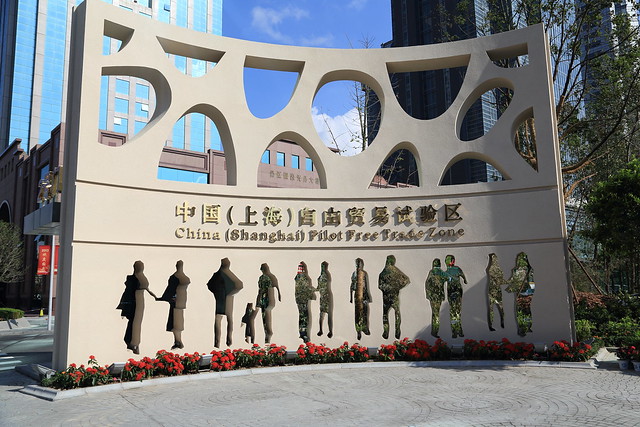
In speech after speech, Mr. Xi and Mr. Li have put their political capital on the line by promoting economic reform. They have drawn up blueprints and adopted pilot programs — like a free-trade zone in Shanghai — that will bolster the market and rationalize the allocation of capital, for instance by permitting more foreign competition and greater fluctuation of interest rates.

Other reforms, including liberalizing deposit rates, still need to be put in place, but an experiment to liberalize lending rates is a very positive step. So is Beijing’s signal that it might open more sectors of its economy to competition through a bilateral investment treaty with the United States.

Second, China’s new leaders are strong enough to press for change. The history of Chinese economic reform suggests that vigorous central leadership is essential. Deng Xiaoping was the determined architect behind China’s initial reforms in 1978 and their reinvigoration in 1992. Zhu Rongji, the prime minister under President Jiang Zemin, pushed through reforms of the taxation system and state-controlled industries that paved the way for China’s joining the World Trade Organization in 2001.

But in the decade or so since then, reforms stalled, and a major cause was the evaporation of political commitment in Beijing. The new leaders have signaled that they are prepared to move. An anti-corruption campaign begun by Mr. Xi demonstrates a willingness to take on even the most politically sensitive pillars of the state-led economy.

Third, China no longer has the luxury to delay needed reforms. China’s economic output expanded nearly sixfold between 2002 and 2012, from $1.5 trillion to $8.3 trillion, but that growth fostered complacency. True, it weathered the financial crisis through giant spending on public works, but that only put off the day of reckoning. The presumption that China can simply grow its way out of any problems no longer holds. Growth is slowing, inequality has widened, provincial and local government debts have climbed. China’s export-oriented sectors face harsh headwinds, from sluggish consumer demand in advanced markets to rising labor costs at home.

Fourth, public expectations for change are higher than ever. When the new leaders were appointed last year, they were compared favorably to their immediate predecessors, President Hu Jintao and Prime Minister Wen Jiabao. But the honeymoon for Mr. Xi and Mr. Li, who took over last November, is over.

Increasingly, they are being measured against the bold Mr. Jiang, the Communist Party leader from 1989 to 2002, and Mr. Zhu, the prime minister from 1998 to 2003. And so the necessity for action is greater.

Momentum is building for reforms that would introduce market prices for oil, gas and other natural resources so that prices better reflect supply and demand, rather than official fiat. Distorted pricing has been one cause of China’s energy inefficiency and environmental degradation. Like the new steps toward liberalizing energy prices, Shanghai’s new free-trade zone is another positive indicator. More is needed — broader access to capital, greater investment options and protections from the risk of haphazard capital flows — if Shanghai is to become a global financial center.

A new round of fiscal reforms is also likely, leading to more rational allocation of resources between the central and local governments, which are struggling to rebuild weakened rural pension and health care systems and manage the largest urbanization in human history in a sustainable way, while paying for unfunded mandates from Beijing and maintaining job growth.

This vast array of specific reforms can’t be achieved at a stroke, and certainly not at a single party gathering. But the decisions likely to be taken in November will set China’s economy in a positive — and lasting — new direction. Advanced economies, like the United States and the European Union, depend on it as much as China does.

Henry M. Paulson Jr., the secretary of the Treasury from 2006 to 2009 and a former chairman and chief executive of Goldman Sachs, is chairman of the Paulson Institute, which promotes sustainable growth and a cleaner environment in the United States and China.


Mark Thomason Clawson, MI
"if Shanghai is to become a global financial center" on the scale of China in the world, the second largest economy, that will be tremendous competition for the existing financial centers.

This must have a special appeal to China, and many others, because NYC and London and the Eurozone have failed so badly in the financial crisis they committed and have not cleaned up.

This could have important effects, forcing a clean up of existing financial centers that have been taking for granted and abusing their market power.


Bob North Bend, WA
Paulson is the same guy who said USA economy was in the best shape ever, back in 2007. Right now, about China, he might be right, he might be wrong. Problem is, he has no credibility. He's already shown himself to be a panderer. So, I say, go pander somewhere else -- 'cause I ain't listenin'.


Nathan an Expat China
Nice to see an analysis of China in the NYT that does not position the country as an as some sort of dystopian nightmare and/or emerging military threat. China's leaders' greatest challenge is a population of almost 1.4 billion split almost evenly between groups living in 19th, 20th and 21st Century conditions and mindsets. (The 20th and 21st century group accounts for the country's 600 million Internet users.) It's a challenge similar to what the US would face if Washington was suddenly made legislative capital of not just the US but all of Central and South America and the Caribbean and had to directly govern that developmentally diverse a population. Over the past 30 years China has done a pretty good job lifting 300 million out of poverty and investing heavily in education and infrastructure. Almost everyone in the country is on an upward trajectory economically. Not since the Tang Dynasty have things looked so good for so many. But as Paulson notes the time has come for China to change its unsustainable investment led growth economic model and focus on sustainable growth derived from domestic consumption. Again good news for the average Chinese who will be seeing increased investment in social spending/medical care to help them unlock their wallets. The major foreign policy issue rising China faces is managing their relationship with an increasingly prickly, stagnating or in decline America whose frustrated population all too ready to blame China for its problems.


JE White Plains, NY
Paulson the Wall Street banker who under Bush Jr. as treasury secretary helped his friends on Wall Street raid the government's treasury in broad daylight is now urging China to "liberalize" (open up to the "free market" casino) it's economy!?

Our own country to this day is still suffering from the Wall Street manufactured crisis in 2008 and hasn't recovered. Those bailouts and the continued massive money printing under QE have only kicked the can down the road, and is setting this country up for a much worse financial disaster and hyperinflation.

We need Glass-Steagall to be reinstated via Marcy Kaptur's bill in Congress and John McCain's and Elizabeth Warren's bill in the Senate to shut down the trillions derivatives and other toxic financial instrument, to cancel this bad, illegitimate debt off the government's books, otherwise, not only will our economy keep disintegrating but so will China's as well as the rest of the world.


Nelson Alexander New York
This is almost bizarre. Minus the almost.

Just prior to the financial meltdown in 2007, Paulson was insisting that the Chinese "open up" and adopt our own financial models. Then, stuff happened.

In our own system, the taxpayers were forced, by Paulson et al., to hand billions over to the bankers. Presumably, this is the "free market" system Paulson wanted and still wants China to adopt.

In our own "free market" system, the banks can basically use the state to transfer taxes to themselves whenever they wish...or whenever they declare a "crisis."

Is this the system China should adopt?

Obviously, Pauslon et al., want to "invest in China." Which has a massive, unprotected labor supply...the source of value. Why wouldn't they?

They can even promise the Chinese, their lives will get "better." (As long as American live get "worse.")

As a typical Marxist, I agree that American lives should, must, and will get worse. So be it. But I hate the hypocrisy (or stupidity) of these antiquated capitalist rationalizations.

Paulson, I always thought, is probably a decent man. But he seems to have learned nothing. He needs to read much, much more history and philosophy before he opens his mouth again.


CSW New York City
"The presumption that China can simply grow its way out of any problems no longer holds. Growth is slowing, inequality has widened, provincial and local government debts have climbed. China’s export-oriented sectors face harsh headwinds, from sluggish consumer demand in advanced markets to rising labor costs at home."

Hey, this sounds like a description of the US economy as commandeered, for the past thirty years, by the neo-conservative/liberal crowd starting on January 20th, 1981. Perhaps they can pivot towards Asia and thus give China and other countries (through the TPP agreement) the same advise they gave our presidents. They can prove Einstein's adage wrong by recommending the same strategies but insisting on different outcomes.


Otto Winter Park, Florida
"An anti-corruption campaign begun by Mr. Xi demonstrates a willingness to take on even the most politically sensitive pillars of the state-led economy."

I would like to hope that this is true. However, in the past, "anti-corruption campaigns" have amounted to nothing more than one faction using its superior clout to crush an opposing faction. Since all of China's prominent families are embedded in the nation's major industries in a way that most observers would regard as inherently corrupting, it is difficult to see how any anti-corruption campaigns can be effective at this point.


FEDUP Sunshine State
With an economic power house engine, a government that has the ability to make decisions to direct growth and urbanization, a currency that will soon be acceptable worldwide for international trade and no debt....China is well on its way to become the biggest super power in the world.

Too bad our errant leaders are consumed with war mongering, failure to change ineffective policy, failure to govern fiscally, failure to address severe inequality and failure to help Americans. The American ship is sinking faster than most think.

China is going to pass America as America sinks.


burghardt New York, New York
WIth all due respect, I believe it was the same Mr. Paulson who said in 2007 that, "This is far and away the strongest global economy I've seen in my business lifetime."


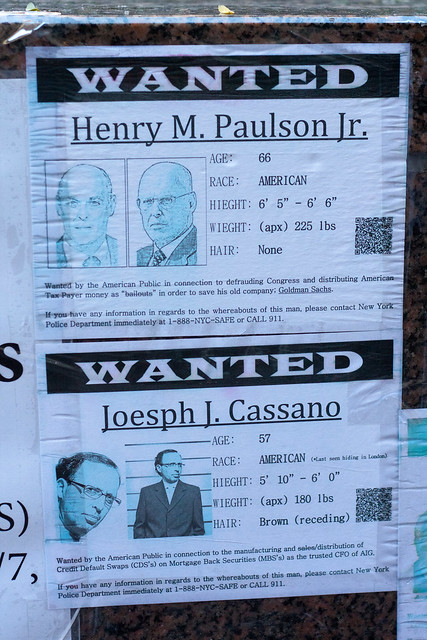
Wanted: Hank Paulson


Meanwhile, China charters cautiously on her own:


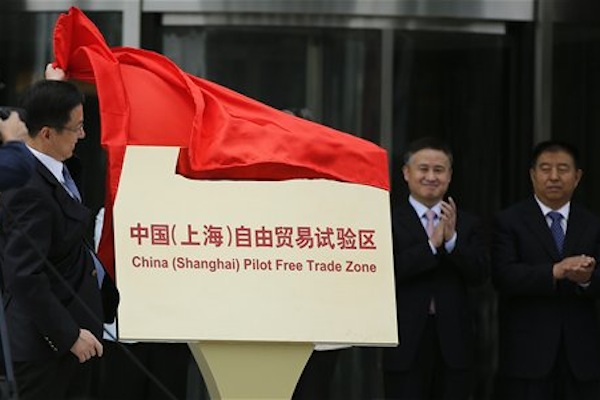
China’s 1st Pilot Free Trade Zone Opens


Experimental Free-Trade Zone Opens in Shanghai
By DAVID BARBOZA
SHANGHAI — China opened a new type of free-trade zone here on Sunday in a bid to test financial changes that the government said could eventually spread to other parts of the country.

The new zone, which has the backing of the State Council, the Chinese cabinet, was first announced last July. It is expected to allow banks and other businesses within its boundaries to experiment in areas that are tightly controlled in China, including loosening regulation of interest rates and full convertibility of nation’s currency, the renminbi.

By opening the new test zone in Shanghai, a city of 20 million and one of the country’s major financial centers, the government appears to be signaling its determination to ease restrictions on investment while also trying to press ahead with plans to open up its financial system and internationalize its currency, analysts say.

The government has not yet given a detailed outline of how the pilot zone — which covers 29 square kilometers, or about 11 square miles, of ports and logistics areas — is expected to operate. But on Friday, the State Council said foreign and private companies would soon be allowed to invest freely in banks, shipping ventures, travel agencies and health and medical insurers that are set up in the experimental zone.

Restrictions are also being lifted on foreign investment in some telecommunications services and on the production and sale of video game consoles.

The creation of a free-trade zone in Shanghai comes as China’s new leaders try to grapple with how to restructure a fast-growing economy that favors state-run enterprises and restricts foreign investment and the free flow of capital.

The value of real estate in the area near the experimental zone has shot up in recent months, along with the share prices of publicly listed companies operating in or around the zone. But the leaders of multinational corporations have been pressing the government for more details, and it remains unclear how it will interact with other parts of China.

“There’s a lot of interest, but few people know the details yet,” said Stephen Green, a Hong Kong-based economist at Standard Chartered Bank.

But Yao Wei, a Hong Kong-based economist at Société Générale, said in a report this week that the signs were encouraging, and that creating the zone was reminiscent of the bold experiments China made in the previous decades.

“The overarching theme of all the reform in the 1980s and 1990s was, simply put, liberalization,” Ms. Yao wrote. “Local experiments in strategically important cities not only served as policy signals of reform commitment but provided guidance as to the path of upcoming changes.”


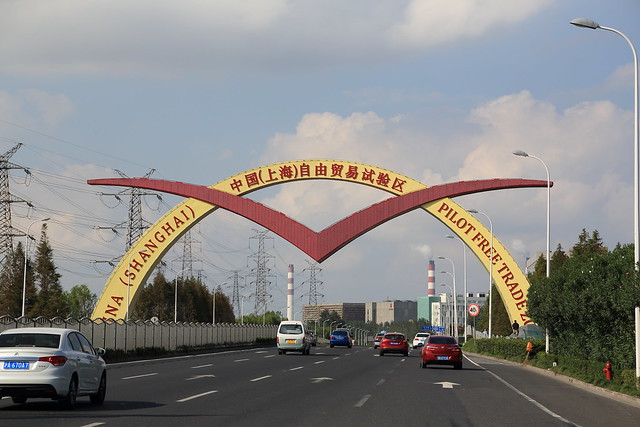
China (Shanghai) Free Trade Zone


China (Shanghai) Free Trade Zone

19.9.13

A Plea for Caution From Russia
You do realize it is an opinion article right?

Secretary Kerry Meets With Russian President Putin


By VLADIMIR V. PUTIN


MOSCOW — RECENT events surrounding Syria have prompted me to speak directly to the American people and their political leaders. It is important to do so at a time of insufficient communication between our societies.

Relations between us have passed through different stages. We stood against each other during the cold war. But we were also allies once, and defeated the Nazis together. The universal international organization — the United Nations — was then established to prevent such devastation from ever happening again.

The United Nations’ founders understood that decisions affecting war and peace should happen only by consensus, and with America’s consent the veto by Security Council permanent members was enshrined in the United Nations Charter. The profound wisdom of this has underpinned the stability of international relations for decades.

No one wants the United Nations to suffer the fate of the League of Nations, which collapsed because it lacked real leverage. This is possible if influential countries bypass the United Nations and take military action without Security Council authorization.

The potential strike by the United States against Syria, despite strong opposition from many countries and major political and religious leaders, including the pope, will result in more innocent victims and escalation, potentially spreading the conflict far beyond Syria’s borders. A strike would increase violence and unleash a new wave of terrorism. It could undermine multilateral efforts to resolve the Iranian nuclear problem and the Israeli-Palestinian conflict and further destabilize the Middle East and North Africa. It could throw the entire system of international law and order out of balance.

Syria is not witnessing a battle for democracy, but an armed conflict between government and opposition in a multireligious country. There are few champions of democracy in Syria. But there are more than enough Qaeda fighters and extremists of all stripes battling the government. The United States State Department has designated Al Nusra Front and the Islamic State of Iraq and the Levant, fighting with the opposition, as terrorist organizations. This internal conflict, fueled by foreign weapons supplied to the opposition, is one of the bloodiest in the world.

Mercenaries from Arab countries fighting there, and hundreds of militants from Western countries and even Russia, are an issue of our deep concern. Might they not return to our countries with experience acquired in Syria? After all, after fighting in Libya, extremists moved on to Mali. This threatens us all.

From the outset, Russia has advocated peaceful dialogue enabling Syrians to develop a compromise plan for their own future. We are not protecting the Syrian government, but international law. We need to use the United Nations Security Council and believe that preserving law and order in today’s complex and turbulent world is one of the few ways to keep international relations from sliding into chaos. The law is still the law, and we must follow it whether we like it or not. Under current international law, force is permitted only in self-defense or by the decision of the Security Council. Anything else is unacceptable under the United Nations Charter and would constitute an act of aggression.

No one doubts that poison gas was used in Syria. But there is every reason to believe it was used not by the Syrian Army, but by opposition forces, to provoke intervention by their powerful foreign patrons, who would be siding with the fundamentalists. Reports that militants are preparing another attack — this time against Israel — cannot be ignored.

It is alarming that military intervention in internal conflicts in foreign countries has become commonplace for the United States. Is it in America’s long-term interest? I doubt it. Millions around the world increasingly see America not as a model of democracy but as relying solely on brute force, cobbling coalitions together under the slogan “you’re either with us or against us.”

But force has proved ineffective and pointless. Afghanistan is reeling, and no one can say what will happen after international forces withdraw. Libya is divided into tribes and clans. In Iraq the civil war continues, with dozens killed each day. In the United States, many draw an analogy between Iraq and Syria, and ask why their government would want to repeat recent mistakes.

No matter how targeted the strikes or how sophisticated the weapons, civilian casualties are inevitable, including the elderly and children, whom the strikes are meant to protect.

The world reacts by asking: if you cannot count on international law, then you must find other ways to ensure your security. Thus a growing number of countries seek to acquire weapons of mass destruction. This is logical: if you have the bomb, no one will touch you. We are left with talk of the need to strengthen nonproliferation, when in reality this is being eroded.

We must stop using the language of force and return to the path of civilized diplomatic and political settlement.

A new opportunity to avoid military action has emerged in the past few days. The United States, Russia and all members of the international community must take advantage of the Syrian government’s willingness to place its chemical arsenal under international control for subsequent destruction. Judging by the statements of President Obama, the United States sees this as an alternative to military action.

I welcome the president’s interest in continuing the dialogue with Russia on Syria. We must work together to keep this hope alive, as we agreed to at the Group of 8 meeting in Lough Erne in Northern Ireland in June, and steer the discussion back toward negotiations.

If we can avoid force against Syria, this will improve the atmosphere in international affairs and strengthen mutual trust. It will be our shared success and open the door to cooperation on other critical issues.

My working and personal relationship with President Obama is marked by growing trust. I appreciate this. I carefully studied his address to the nation on Tuesday. And I would rather disagree with a case he made on American exceptionalism, stating that the United States’ policy is “what makes America different. It’s what makes us exceptional.” It is extremely dangerous to encourage people to see themselves as exceptional, whatever the motivation. There are big countries and small countries, rich and poor, those with long democratic traditions and those still finding their way to democracy. Their policies differ, too. We are all different, but when we ask for the Lord’s blessings, we must not forget that God created us equal.

Vladimir V. Putin is the president of Russia.


vladimir putin


Citizen Texas
Say what you will about the Russians and Mr. Putin in particular. This reaching out is unprecedented. Surely our country and our leaders cannot ignore this gesture from the Russian government. We, at the very least, should meet this offer in sincerity and in the hope, that something good and lasting will come of the discussions between our two nations. The stakes are far too high to let this moment over take either one of our nations. Put aside mistrust and bad feeling for the moment, and try find and do something positive for the world. The killing needs to stop. We really can live in peace with each other if only we would really try.


Chris McMorrow Waltham, Mass
I wish I could feel that Mr. Putin was being sincere here. If nothing else, he has a fabulous writer.

But at my age, having grown up during the Cold War and witnessed all sorts of tricks, lies, distortions, and manipulations by the old Soviet Regime, I just have some doubts. As an ex-KBG agent, Mr. Putin may not be my age, but he was trained in the old Soviet culture.

I think the main thing that really strikes me here is how myopic the US can be to its image around the world. We pay lip service to the idea that certain actions will "surely win us more enmity around the world," but we usually go on our merry way trying to get our way.

So, the benefit of Mr. Putin's assessment here--even if contrived, manipulative, and written to lecture this country, in and of itself a pretty arrogant act--is how based in realpolitik it is.

But--and this is a very big but--I'm not sure that Russia is in any position to lecture anyone right now, given its long history of isolationism, paranoia, and curbs on basic freedoms inside its borders.

I think it will be interesting for all of us to save this article, and our posts, and see how they stack up against events as they unfold over the next 6 months. We will either be pleasantly surprised, or just surprised as how gullible we really were.


B Henly New York
Putin has consistently given the US sound advice, including on Afghanistan. I happen to believe he is also doing the Obama administration a favor by keeping Edward Snowden quietly in Russia, thereby avoiding the media circus and political distractions that would result from having him in jail on US soil. Having Putin in effect lecture us on our mistakes may stick in the craw of some Americans, but he happens to be right in this case, in spite of his own faults.


Dmitry Mikheyev Moscow, Russia
In full disclosure, I am Russian American, who has no reason to love the KGB and has all reasons to love America. I spent 6 years in GULAG and then was granted political asylum in America. But to me, this ’s stance on Syria makes more sense that anything else I heard from American political-military-industrial-media elite. I admit meeting very smart KGB guys even when they were interrogating me. Putin is obviously one of the most gifted and intelligent world leaders of our time. But of course great brain power can be very dangerous in the wrong hands, right? So what motives him?
Having lived in Moscow for 15 years I am confident that after decades of Communism Russia is obsessed with catching up with the West in technology and living standards. So Russia needs peaceful and stable international environment.
In contrast, the US is a crusading whose global ambition is to "civilize and modernize” the world according to its own image. Putin captured the fundamental paradox of American democracy: Can liberty, democracy and happiness be imposed on others by bombs and destruction?
America should help Russia facilitate solution to the Syrian crisis through negotiations and compromises. America has to learn to live with complexities of the real world. The black-and-white thinking leads to endless wars with others. Such policy will inevitably result in self-destruction.


Lynn Nadel Tucson
Its perhaps sad for us Americans when the President of Russia makes more sense than our own political class. He hit the nail directly on the head with his analysis of American exceptionalism. While not denying that the American idea, as embodied in the Constitution and the Bill of Rights, is exceptional, it is also the case that much has happened in the 200+ years since we started, and that as a country we are very far from the 'perfect union' envisioned. Our sense of exceptionalism, pandered to by all political parties, provides an excuse for meddling in other countries' affairs, and for refusing to look beyond our borders for good ideas about such things as health care, maternal leave policies, and more. If we were doing extremely well in these areas perhaps our exceptional claims would stand up, but who is willing to make that argument now.

Chances are the reaction to these words from President Putin will be ignored, or even outright rejected -- but I hope our own President Obama, whom I greatly admire, will use this opportunity to recalibrate how Americans see the world. We indeed are exceptional, but so are the Norwegians, and the French, and the Peruvians, and just about every culture that has carved out its own part of our universe. There is certainly evil in the world, but it cannot be the job of any one country to police the world, and to impose its ideas about how things should and should not be everywhere on this multi-cultural planet.


September1940 Stamford CT
I am shocked that, after reading President Putin's opinion, I feel that he is correct. The Russian President, an ex-KGB agent, a man who has led his county on some of their own missions of destruction, suddenly delivers a message which strikes a chord in me. Why, I wonder, am I reacting this way?

I think it is because, despite the hypocrisies in President Putin's writing, he makes sense - simple, common sense. He appears to cut through all the fog and word-spinning we are used to hearing from politicians - certainly from our own President - and gets to the kernel of the matter.

Force has, indeed, proven pointless. Where are we after the optimism of the so-called "Arab spring?" We still are confronting lunatic fringe elements who are propelling their societies into chaos, in the name of religion. We are constantly at war and finding it too easy to take international law into our own hands; acting unilaterally and, unfortunately, being perceived as the world's bully.

I pray that our President finds the same portion of common sense and manages to get himself under control - his bellicose and nonsensical speeches notwithstanding.

Thousands of people in Syria have been killed prior to the alleged chemical attack. Why did we/the world not respond to their deaths? A dead person is a dead person.

It doesn't matter who offers the olive branch or what it looks like - we must accept President Putin's well-reasoned approach to fending off a rush to military action.


George San Jose, CA
Mr Putin makes many points, some I disagree, some I agree. But all are perfectly valid concerns. I commend Mr Putin for contributing to the discussion.

Mr Putin's main concern is the issue of who's responsible for the recent chemical attack. Mr Obama admits the issue remains in dispute, but believes there is substantial evidence the Syrian government is responsible. Mr Putin believes it may in fact be the Rebels who are responsible. It would be hard to disagree that this is the key issue and deserves full "due process" resolution.

US constitutional law might offer some help here. It requires in a dispute such as this, where a crime may have been committed, for the accuser (Mr Obama in this case) to provide all evidence pertinent to the crime be made available to the accused (Mr Assad, presumably in this case represented by Mr Putin). "All evidence" , meaning that which supports the accuser's claims, and also that which supports the accused claims -- the so-called exculpatory evidence. Mr Obama should immediately provide this evidence to Mr Putin.

US law rules of evidence also require that testimony or claims be of first person origin. No third person testimony -- so-called "hearsay" evidence -- is allowed. Mr Obama should comply, and offer evidence only which can be supported by first person testimony. With names attached.


resident alien DC
Putin's comments about the danger of preaching American exceptionalism may have been irrelevant to the immediate issue but they are important. I was born in the UK. When I was young we Brits believed we were exceptional too, and most other nationalities were flawed (couldn't fight, couldn't produce etc). When kids grow up to believe through implication or actual teaching that they are superior to other peoples it affects how they view the world - after all military action against flawed nations does not matter so much. The fact the 4,000 Americans died in Iraq is apparently more important than the fact the 200,000 Iraqis died. It is fine for Obama to say that America is exceptional in the specific context of being the only country willing to take action to enforce international law and peace because that's true. But the US constitution states that we are born equal and that applies by the way to all people. To suggest that Americans are superior overall is dangerous because it leads to misjudgments such as underestimating the costs of war to the World. That is highly relevant to this issue.


Viktor Pittsfield, MA
As a person that spent 3/4 of my life in the USSR-Russia I have to tell that the history of that country and even its existing state do not make me optimistic in evaluating its actions and intentions. The Communist regime killed many millions of their own citizens, and Chechen war took about 100,000 lives- fully comparable with deaths in Syria.
But, unfortunately, Mr. Putin is right in one, the most important thing: the USA believes in its exceptional role and the force to instill it on the world. America has only 5% of total world population and cannot be a world gendarme forever. Worse, most of Americans, and even our government, do not understand deeply, or at all, national, religious, ethnic, historical and cultural specifics of other nations and tribes, so many of US international actions are useless or even counter-productive. That Russia also got defeated in Afghanistan is not a good solace to our situation in Afghanistan and Iraq.
I do not believe that any limited strike could change the Syria situation to better, rather opposite. So, we have to be more cautious here and, choosing our actions, work with our nations even we do not like them.


AR Chicago
Quite possibly, Putin's intended audience is not the American people, but the citizens of the rest of the world. He wants to be their hero -- standing up to the US, pointing out our hypocrisy.

I don't trust Putin, but I think he is exploiting a weakness that the US needs to correct, namely, that we are far too mired in self-delusional, campaign-style spin -- even on the international stage, e.g. that we'd be welcomed as liberators in Iraq, that President Obama's Syria strategy was a high-level chess game and played out exactly the way he planned.

But foreign policy isn't like campaigning. We have to use logic and earned respect (gravitas) to persuade other countries to join with us on matters such as Syria. We have to marshal our knowledge of their particular cultures and political sensibilities. We can't just go around lecturing people about why don't they care more about the poor Syrian children.


Putin Obama Surveillance


The Story Behind the Putin Op-Ed Article in The Times


The Times editorial department was approached Wednesday by an American public relations firm that represents Mr. Putin, offering the piece.  Also on Wednesday, Mr. Putin’s spokesman, in the course of an interview about Syria, mentioned to The Times’s Moscow bureau chief Steven Lee Myers that an article was in the works.
Mr. Rosenthal agreed to review the article and quickly decided to publish it. It was posted on the Times Web site by Wednesday evening.
“I thought it was well-written, well-argued,” he said. “I don’t agree with many of the points in it, but that is irrelevant.”
“Syria is a huge story and Putin is a central figure in it,” giving the piece great news value, he said. It has created a major stir, including plenty of criticism. Richard Murphy of Fairfield, Conn., wrote to me Thursday with harsh words for The Times’s decision to publish it. He described himself as “horrified” and said that The Times was “aiding and abetting a long-term foe of the United States.”
Mr. Rosenthal rejects that argument.
“There is no ideological litmus test” for an Op-Ed article, he said. In addition, he said, it is not the purpose of the Op-Ed pages to help or hurt the American government. It is to present a variety of interesting and newsworthy points of view, at least some of which will be contrary to The Times’s own point of view, expressed in its editorials.
The Times has published very few Op-Ed pieces by heads of state, Mr. Rosenthal said, partly because they have their own ways of getting their messages out.
This was different, he said, because “everyone wants to hear from Putin right now” and this article was “fascinating and detailed,” providing new information.
I asked him about Mr. Putin’s statement that there is “every reason to believe” that the poison gas has been used by opposition forces, not the Syrian government – which many now do not believe to be true. Mr. Rosenthal said that “falls into the category of opinion.”
Mr. Rosenthal said there was no way of knowing whether Mr. Putin himself wrote the article – “with a public official you can never know,” because they tend to have staffers who write their speeches and other communications. But, he said, it needed virtually no editing and went through almost no changes. “It was an amazingly good translation,” he said.
 The public relations firm that pitched the Putin article to The Times was Ketchum, as others, including Rosie Gray from BuzzFeed, reported Thursday. The relationship between Ketchum and Russia was explored by ProPublica, the investigative reporting organization, last year. In a recent ProPublica post, Justin Elliott summarizes the new developments and recaps what was reported earlier, including that Ketchum received $1.9 million from Russia in the first half of this year
The Washington Post’s foreign affairs blogger, Max Fisher, fact-checked and commented Thursday on the Putin Op-Ed, characterizing it as fascinating, but containing “undeniable hypocrisy and even moments of dishonesty.”   Times readers would benefit from a similar examination.  And a Guardian story reported that, according to his spokesman, Mr. Putin wrote most of the article himself with contributions from his staff.


Putin August first 2013 Snowden/Obama - Double Focus Prism: "The promise given was a necessity of the past: the word broken is a necessity of the present." - Niccolò Machiavelli


Will St Paul, MN
I have no qualms about your publishing the letter. However, I am absolutely aghast that so many or your readers fail to comprehend the multiple layers of propaganda buried within it.

Putin is not a neutral player in the Syrian civil war -- the Russian government is operationalizing the Assad forces.

Putin's goal is to defend a strategic ally, and as the Balkans showed, Russian governments have a tradition of standing on shaky moral grounds to defend their few allies -- including trotting out the famous Russian belief in "non-interference."

Russia plays a hugely diminished role internationally, compared to the grand ideological struggles of the 20th Century that Putin references.

And the idea that Vladimir Putin is somehow the conscience of the world is so preposterous that my mind reels when I read comments about his "reasonable" and "moderate" approach to diplomacy.

How could so many of your readers be so deluded about Putin's motives?

Please, for the sake of journalistic balance and of educating your readership, provide some context here.


Citizen Texas
I would strongly surmise that one of the many reasons this country has so little respect in the world anymore is because of the attitude that this countries government and citizens are constantly shoving down everyone's throats; "It's our way or the highway!" "We are the greatest people in the history of the world." By implication, all that really means is everyone else in the world is inferior to us. "We are the greatest country in the world." Not any more we're not. We gave that up, if we ever had it at all when we started torturing people and water boarding them and throwing them in prison with no trails. Spying on and lying to the American public and to the rest of world doesn't exactly help that "great" image either.
We are not always right. Simple fact. We've lost the ability as a country to really help others, feel any compassion anymore, unless there is something in it for us. If we are so great and perfect, why do we have people in this country going to bed every night hungry?
We have become a country of haves and have not's. Rich against poor. We need to take a long hard look in the mirror and decide if what we are looking at is really that great anymore. I for one don't think so.


S Brooks Chicagoland Suburbs
I had to smile when noticing one of the reader comments that referenced the fact that president Putin held a key position with the KGB and implied that he could never be trusted. I guess the poster is too young to remember that George H Bush was the director of our very own CIA before being elected president of the United States.

Guilt by association is always a risky charge, but it does make for great talking points.


mark22660 Vermont
All this Putin bashing by readers of The New York Times is embarrassing. He's an ex-KBG agent, I'll give you that. He's against gay people and I'll give you that too, but for years this country was as well and there are many who still are.
We also must remember that Bush Sr. had been the head of the CIA, yet we trusted him, even as we went into Panama and slaughtered hundreds upon hundreds of women, children and babies ourselves, while being fed misleading information and lies about why we actually went in and then kept in the dark by the coverup that followed. Bush Jr. did the same in Iraq only this count was over a million of the innocent and Obama continues this tradition to this day in Somalia and Yemen with indiscriminate drone strikes. Most have no idea of this because it's conveniently never reported on. So to come out and make the argument about Putin being ex-KGB or the atrocities that are being committed by the Syrian government is ludicrous and shows that you haven't done your homework and therefore have no real understanding in regards to what our own country has become.We no longer stand for truth or justice and the American way has become a fallacy. We have become the evil doers. We have become a terrorist organization. Today, attempting to report the truth, journalists find themselves becoming enemies of the state or worse, the fear of government retaliation under what I refer to as The Micheal Hastings Act.
This country is not even close to being exceptional


Shark New York, NY
You do realize it is an opinion article right?

Blog Archive